
LeanLaw Features Every Legal Bookkeeper Needs to Know (Plus Mistakes to Avoid)
Jun 10, 2026Starting out as a bookkeeper in a law firm can feel like stepping into a different world. Legal accounting comes with its own rules, its own vocabulary, and its own high-stakes compliance requirements.
But here's the thing — once you know which tools to use and where to look, managing a law firm's finances becomes far more manageable. LeanLaw is built specifically for this environment and provides bookkeepers with a powerful set of features designed to keep law firms organized, compliant, and profitable. Whether you're brand new to legal accounting or just new to LeanLaw, knowing these core features will help you work with confidence from day one.
Key LeanLaw Features Every Legal Bookkeeper Should Know
1. The Matter Ledger
Every matter has its own ledger showing all time entries, expenses, invoices, payments, and trust transactions. This is your go-to view for understanding the financial history of any case. Get comfortable running the matter ledger reports regularly.
2. Trust Ledger Reports
LeanLaw generates detailed trust ledger reports by client and matter. You'll use these for monthly reconciliation and to respond to any compliance audits. Schedule time at the end of each month to run and save these reports.
3. Billing Workflow
LeanLaw's billing process flows in a specific sequence: time entries → draft invoices → invoice approval → sent to client → payment received. As a bookkeeper, you may not be entering time, but you'll want to understand where invoices are in the workflow so you can follow up on outstanding balances.
4. Accounts Receivable Dashboard
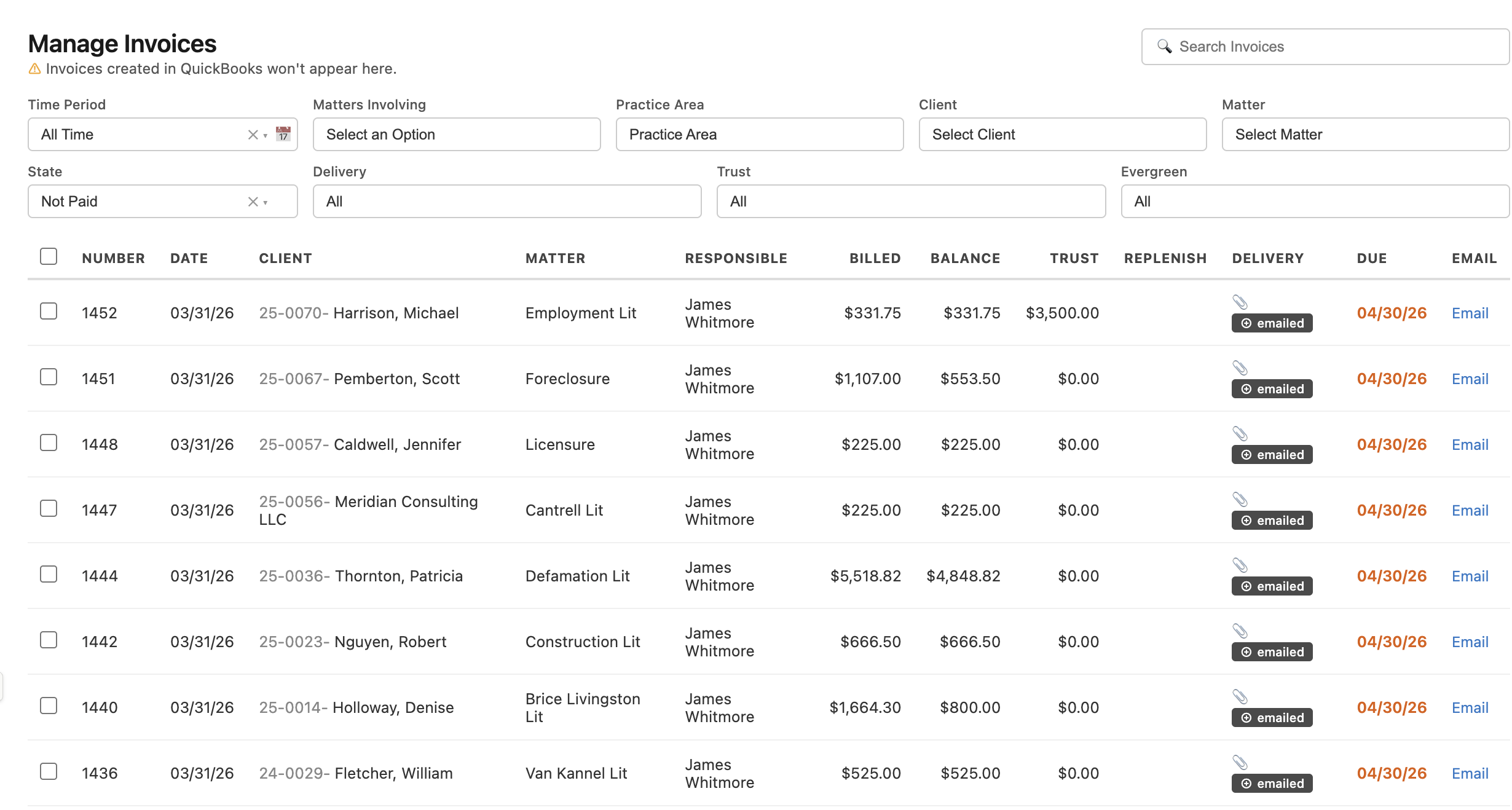
The A/R dashboard in LeanLaw gives you a quick overview of outstanding invoices by client and matter. This is a powerful tool for helping the firm stay on top of collections — something that directly impacts cash flow.
5. Expense Tracking
Attorneys often advance costs on behalf of clients (filing fees, expert witness fees, etc.). These expenses are tracked in LeanLaw by matter and can be billed back to clients. Make sure you understand how the firm handles client cost advances — they may flow through trust or be tracked as receivables.
Of course, this just scratches the surface of all the things you can do with LeanLaw. There are myriad reporting options and customizations available at your fingertips.
Common Mistakes to Avoid as a New Legal Bookkeeper
Mixing trust and operating funds. This is the cardinal sin of legal accounting. Even an accidental commingling can create serious ethical and legal problems for the attorney. LeanLaw is designed to prevent this, but you need to understand the workflow to use it correctly.
Missing the three-way reconciliation. Monthly trust reconciliation isn't optional — it's an ethical obligation in most states. Block time on your calendar every month and don't skip it.
Ignoring unbilled time entries. Time that's tracked but not billed is revenue sitting on the table. Get in the habit of running an unbilled time report monthly and flagging it for the billing attorney.
Not understanding flat fee matters. Not all matters are billed hourly. Flat fee arrangements are recognized as revenue differently — often upon completion of a milestone or the entire matter. Make sure you understand how each matter type is set up in LeanLaw.
Forgetting to sync with QuickBooks. LeanLaw and QuickBooks sync in real time, but it's still good practice to spot-check that your invoices, payments, and trust transactions are appearing correctly in QBO on a regular basis.
Legal bookkeeping has a learning curve, but LeanLaw is designed to make that curve as smooth as possible. By getting familiar with the matter ledger, trust reports, billing workflow, A/R dashboard, and expense tracking — and by steering clear of the most common pitfalls — you'll be well on your way to becoming an indispensable part of any law firm's financial team. The firms that run most efficiently aren't just relying on great attorneys; they're backed by bookkeepers who truly understand the tools. Now you're one of them.
Have questions about navigating LeanLaw as a bookkeeper? Leave a comment below or reach out — we're here to help you make sense of legal accounting one feature at a time.
Stay connected with news and updates!
Join our mailing list to receive the latest news and updates from our team.
Don't worry, your information will not be shared.
We hate SPAM. We will never sell your information, for any reason.
